
TL;DR
- In FMCG and logistics the buyer is usually a business, and the decision is reliability at scale — not desire. The video's job is proof, not persuasion.
- Trust here is built by proof of capacity — the hub that never stops, the fleet, the systems that mean your volume won't break them.
- The offline trust mechanic is the facility tour; on screen, scale and motion do that work — the film should feel like a machine that doesn't miss.
- First principles: the value is "it arrives, in volume, on time, and I can trust that." Every frame should build confidence in that sentence.
- A studio doesn't need a warehouse portfolio to get this right; it needs to understand what a procurement buyer is de-risking, then make capacity visible and believable.
There are two completely different videos hiding inside the word "FMCG," and confusing them is the most common and expensive mistake in the category. One sells the product on the shelf to a shopper — appetite, desire, the thumb-stopping ad. The other sells the operation behind the shelf to a business — the retailer, the distributor, the brand deciding who to trust with their goods and their volume. This piece is about the second one, and it shares the same DNA as logistics video: a business buyer, a decision about reliability at scale, and a film whose job is proof rather than persuasion.
So this isn't a portfolio of warehouse shoots. It's how to think about video for a business where the buyer isn't a consumer to be charmed but a professional de-risking a decision that affects their own operation. The authority here is the method applied, not a claimed logistics track record.
Follow the money: the buyer is a business, and the fear is "will you break?"
Start where the money is. In B2B FMCG and logistics, the person deciding is a procurement lead, a category manager, a retailer, a brand owner — someone choosing who handles serious volume. This is the opposite of the fast, emotional consumer decision. It's considered, accountable, and driven by risk. The buyer isn't asking "do I want this?" They're asking "if I put my volume through this partner, will it hold — or will it become my problem?"
That single question should reorganise the whole video. A film built to charm or excite this buyer is misreading the room; they're not looking for a feeling, they're looking for evidence. The decisive emotion isn't desire, it's confidence — specifically, confidence that you can handle their scale without failing. Everything the video does should be aimed at that one worry. A logistics video that leans on slick brand mood while never proving it can actually deliver at volume is answering a question nobody in procurement is asking.
There's a scale dimension too. This buyer thinks in throughput, uptime, coverage, consistency. Vague reassurance doesn't move them; visible capacity does. Which points directly at what the film has to show.
How trust is built by proof of capacity — and how the facility tour goes on screen
Every industry closes deals a certain way in real life, and in logistics and B2B FMCG that mechanic is proof of capacity — classically, the facility tour. The prospective partner comes to see the operation: the sortation hub running at full tilt, the fleet, the racking, the systems, the coordinated motion of a place that clearly handles volume every single day. Standing in a working hub that obviously doesn't miss is how trust gets built in this business, because it's evidence you can't fake in a slide.
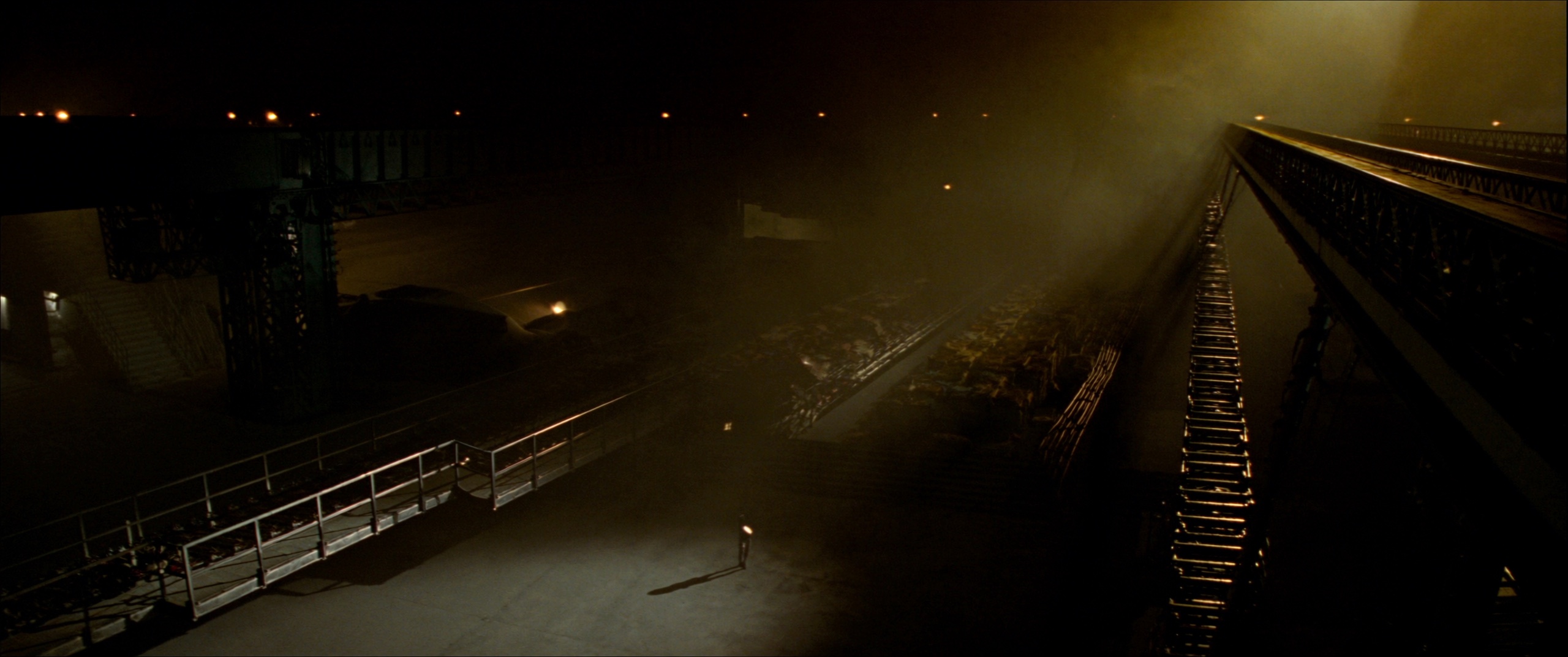
A logistics video, at its best, is that facility tour translated for the many decision-makers who can't fly in to walk the floor. So it should carry what the tour carries: scale and motion. The sheer volume moving through a hub, the choreography of a well-run operation, the sense of a machine that doesn't stop — that footage does reassurance work no spec sheet or adjective can. Everyone in the category claims to be reliable and large; showing it is the differentiator. Motion, in particular, is the language of reliability here — a facility captured mid-flow, humming, is proof of life that a static beauty shot of an empty warehouse never delivers.
The tone follows from this too. The register isn't consumer-ad excitement; it's the quiet confidence of competence. The film should feel like the operation feels to a buyer who trusts it: large, coordinated, unhurried, inevitable — a machine that doesn't miss. Over-styling can actually work against you, if it makes the footage read as an ad rather than as evidence of a real, working operation.
Sit with the operator, cut it back to fundamentals
The operator knows things a studio can't guess — and here they're the technical proof. Which number makes a procurement buyer relax (throughput? uptime? on-time rate?). Which part of the operation is genuinely the differentiator versus the part that just looks impressive on camera. Where the real reliability comes from — the redundancy, the systems, the people who've done this for years. A real conversation pulls that out, so the film proves the right capacity, aimed at the specific fear this buyer actually carries, rather than defaulting to generic "big warehouse" footage.
This is worth stressing because logistics footage is easy to make impressive and hard to make relevant. Drones over a big facility look great and prove little. The operator is the one who knows which evidence actually de-risks the decision — and that knowledge is what turns handsome footage into a persuasive case.
Then strip it to first principles. Underneath the systems and the scale, the value of an FMCG or logistics operation is one honest sentence: "it arrives, in volume, on time, and I can trust that." That's what the buyer is really buying. Every choice in the film — which facility, which motion, which numbers, which tone — should be tested against whether it makes that sentence more believable. If a shot looks cinematic but doesn't build confidence in delivery, it's the wrong shot for this job.
When the real job is a consumer ad
Straight talk: if your actual goal is to sell the product to shoppers — move units off the shelf, win the feed — then none of this applies, and you should build a consumer ad instead: appetite, desire, brand emotion, optimised for the scroll. Trying to prove supply-chain reliability to a shopper deciding on a snack would be answering a question they don't have. Different buyer, different fear, different film.
The thinking here is for the B2B situation: winning a retailer, a distributor, or a partner whose decision is about whether you can be relied on at scale — where proof of capacity, not persuasion, is what closes it.
What footage can't fake
This isn't a claim that impressive footage makes an unreliable operation look bankable. It can't, and it shouldn't try — the whole power of this kind of video is that it's evidence, and evidence only reassures when the operation it shows is genuinely capable. Video makes real capacity visible; it can't manufacture reliability that isn't there, and a film that oversells a fragile operation just sets up a failure the buyer will remember.
And it isn't a template. The honest answer for a national last-mile network proving coverage and a specialist cold-chain operator proving consistency are different videos, which is exactly why the question is never "warehouse or drone footage?" but "what is this buyer de-risking, and what proof would settle it?" — a conversation, not a shot list.
Thinking about a project like this?
Tell us what it needs to do — we'll take it from there.
Frequently asked questions
- Who is the real audience for an FMCG or logistics video?
- Usually a business buyer, not a consumer — a procurement lead, a category manager, a retailer, a brand deciding who moves their goods. That changes everything. This audience isn't looking to be charmed; they're de-risking a decision that affects their own operation. They want evidence that you can handle their volume reliably, at scale, without becoming their problem. The video's job is to answer that worry, not to sell a feeling.
- What does a logistics or FMCG video actually need to prove?
- Capacity and reliability. A buyer's core fear is "will this partner break under my volume?" So the film has to make scale and consistency visible and believable — the sortation hub running smoothly, the fleet, the systems and people that keep it moving. Proof beats adjectives here. Showing a facility that clearly doesn't miss is more persuasive than any claim about being "world-class."
- Why does scale need to be shown rather than just stated?
- Because in this category everyone claims to be reliable and large, so words carry little weight. Seeing it is different: the sheer motion of a working hub, the volume moving through, the coordination — that footage does the reassurance a spec sheet can't. It translates the facility tour, the way this industry actually earns trust in person, into something a buyer who can't visit can still feel.
- Do you need a studio that specialises in logistics to film a warehouse?
- No. The useful skill isn't a warehouse portfolio; it's understanding what a business buyer is de-risking and knowing how to make capacity feel real on screen. The operator brings the operational knowledge; the studio's job is to translate proof of scale and reliability into film. That's a thinking-and-craft problem solved in one real conversation, not a vertical specialty.
- How is this different from a consumer FMCG ad?
- A consumer FMCG ad sells desire for the product on the shelf. A B2B FMCG or logistics video sells confidence in the operation behind it — to the retailer, distributor, or partner deciding whether to work with you. The first runs on emotion and appetite; the second runs on proof and reliability. Same industry, opposite jobs, so they should not be the same video.
Keep reading
- Recruitment and Culture Videos: Selling the Company, Not the ProductA recruitment or culture video sells a different thing than your ads do — the company itself, to someone deciding where to spend their working life. Here's how to think about it: follow the candidate's decision, translate how trust is built in the interview, deep-talk your real people, and strip it to first principles.
- Construction Progress Videos: What They Are and Why Developers Commission ThemA construction progress video isn't a hobby time-lapse. Developers commission them because they solve a real business problem — proving a project is real and moving to the people whose money is on the line. Here's how to think about what one is actually for.
- Video That Works, Industry by Industry: a Malaysian Field GuideWe're not locked into one vertical. Here's the method we use to get to the core of any industry fast — follow the money, find how trust is built, deep-talk the expert, strip it to first principles — so a video does the real job for your business.